credit scores, dogs and traffic behaviour
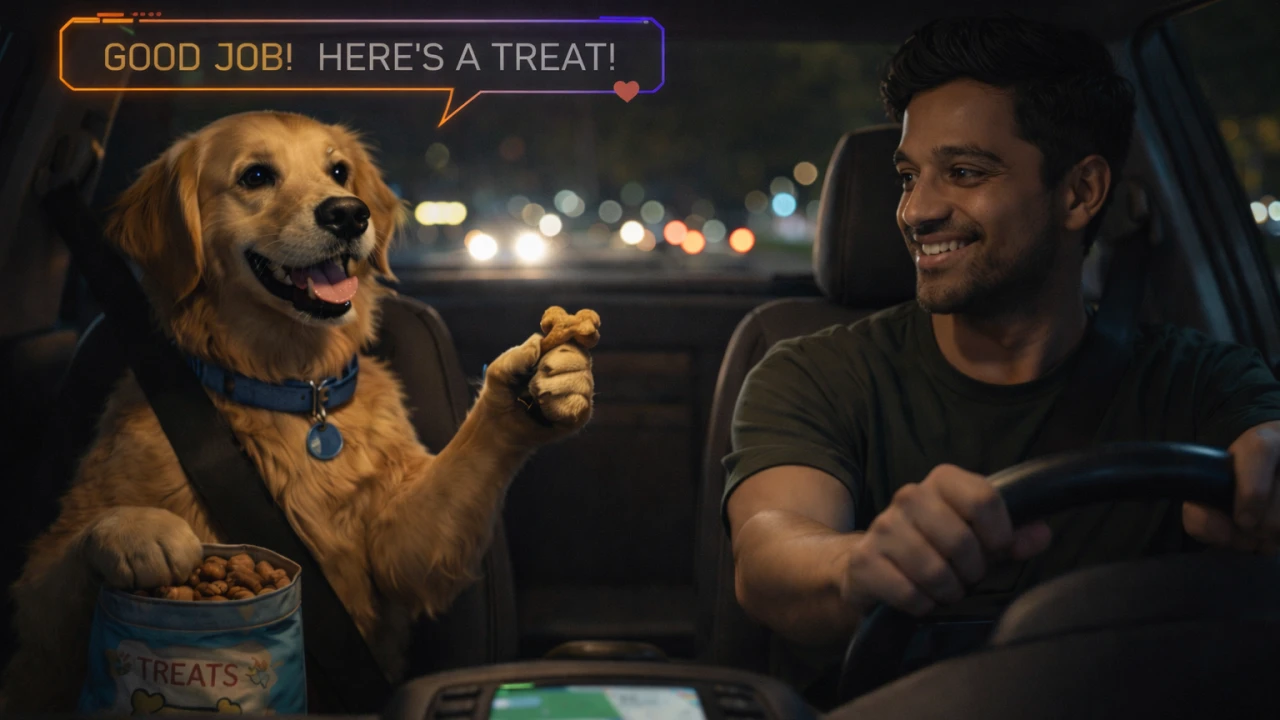
Dogs don’t become loyal because we hit them. Instead, they learn fear or become aggressive. But reward them for doing right, and they choose you for life!
Humans are no different.
B.F. Skinner, (known for his research in Behaviorism), in his book Science and Human Behavior notes that punishment suppresses a behavior temporarily but fails to build the desired behavior and instead ends up producing avoidance, fear, and hostility toward the punisher.
We know this now for over 7 decades since the above gentleman established it, and yet we fail to implement the finding in our real life.
In 2025 alone, 70 Lakh+ traffic violations happened in Bangalore raking in ~Rs. 250 Cr in fines. That’s a 200%+ jump in the fines collected in 2024.
And let’s not talk about the flavourful smell in the air coming from exhaust pipes of vehicles that are long pending for their emission control maintenance.
Between January and July 2025, Bengaluru recorded over 3 million traffic violations, averaging 11,828 cases a day, with 87% detected by AI cameras (seems like Big Brother is watching).
The case is no different for other cities like Gurgaon and Hyderabad.
The system is “working”. It is catching and billing. But is it improving the behaviour?
B.F. Skinner would say - No. With such an enforcement, citizens learn where the camera is. Which lane has a cop. They learn timing. Not discipline. They learn to behave only when watched.
What works then? Maybe, rewarding good behaviour? We’ve already implemented rewarding good behaviour at a population scale. We call it credit score!
A credit score not only punishes bad financial behaviour. It rewards a good one.
1 bad borrower has the potential to impact all banking businesses. Hence all banks follow what the credit score says about a borrower. In case of traffic, such a bad actor has a much larger impact on the economic activity happening in an urban area. Here’s a simple case:
1 accident (without any fatalities) in a critical location can easily block traffic of ~1000 vehicles for 30 mins to 1.5 hours. Take 30 mins and ₹250/- as a lower bound of the average hourly income of people riding on such a road. There goes ₹1.25 Lakhs. And now consider the 5000 accidents (not accounting for unreported or near misses) which happen each year in a city like Bengaluru. That’s ~₹65 Cr per year. This is still just first order economics. There will be a second order economic impact due to critical transportation not completing on time. Plus the loss of life (and the downstream compensation for the same). It shouldn’t be surprising if this number goes beyond ~₹200 Cr per year.
So why not penalise such bad actors within a scoring model? And no, it’s not something for the government to do. Even with credit scores, businesses saw the opportunity first. And later did the government tag along. It’s the case with any major policy shift.
It should be a simple deal: Behave better → your score rises → your transport gets cheaper and smoother.
Proposal: a driving score model (without turning the city into a George Orwell dystopia)
Step one: Think like CRED.
CRED didn’t come and say, “Please improve your credit score.” They said: pay bills here, get super cool rewards. And quietly, they filtered and shaped behavior.
Traffic needs the same trick. The public story can’t be “Today I will reform traffic”. It should be “If you are a good driver, your vehicle ownership and day to day riding becomes cheaper”.
And a score, just like credit score, determines eligibility for rewards and access to better facilities like cheaper transportation, priority servicing etc.
Such a score will not measure what legal rules the vehicle breaks. That could get legally messy. If instead we let the electronics lead the way and measure what physics can establish, we could arrive at an answer.
Hard braking. Sudden acceleration. High jerk. Volatility. (and as the system grows) Driving behaviour relative to other riders on the road. Maybe a mobile integration or something within the vehicle electronics (like an OBD attachment).
Basically answering - How much turbulence did a vehicle inject in the traffic flow.
Occasionally, pedestrians can submit a bad review of a vehicle rash driving on the road or review of a good samaritan stopping their car and letting them cross the road or someone giving a way to an ambulance.
The score becomes a “cooperation signal”, not a “morality meter”. And the rewards? We hit people where it matters:
- Fuel: partner cashbacks or per-litre benefits for top percentile vehicles.
- Insurance: safer drivers get lower premiums or faster claims processing.
- Service and repairs: discounts on brake pads, clutch, tyres, servicing packages.
- Parking: priority slots or discounted monthly passes in tech parks / malls.
- Resale value: “verified calm-driving history” as a trust badge when selling a car.
We’re not waiting for permission from the government to be kind. We’re creating a parallel incentive layer where private players happily reward reduced risk and reduced damage. Because safe, smooth driving reduces claims, wear-and-tear, accidents, downtime, and chaos.
“But the bad drivers won’t install the app.” Correct. They won’t. And that’s fine!
Credit scores didn’t start by forcing every irresponsible person to become responsible. They started by making “verifiable behavior” valuable.
We are not punishing bad drivers for not joining. The killer move is making “no data” expensive at transaction moments.
While renewing insurance, selling a vehicle, joining a fleet, leasing, suddenly, the proof matters! And now, the bad actors get two options: (a) Opt in and reveal their patterns. Or (b) Opt out and stay “unverified risk”.
Both are costly. That’s the same trapdoor credit scores use. No one forces you. But life gets harder when you have no score.
What about the “Big Brother watching” vibes? The city today is already watching to punish. This proposal is to let citizens opt into being seen for reward.
Right now Bengaluru is collecting crores in fines and still feeling like daily cognitive load, daily irritation, daily exhaustion.
So maybe the next “smart city” upgrade is not more cameras. Maybe it’s a better incentive design.
Because dogs don’t become loyal because we hit them.
They become loyal because we teach them what “right” feels like.
Humans are no different.